

WAF Shipping Focus: Week 7
- Agwe Logistics Solutions

- Feb 23
- 4 min read

Abu Dhabi, UAE – 12 February 2026: AD Ports Group (ADX: ADPORTS), a leading global enabler of trade, logistics, and industry solutions, has joined Africa Ports Development’s (APD) 30-year concession to design, build and operate a new dry bulk terminal at the Port of Douala in the Republic of Cameroon. The agreement establishes an investment structure, in which AD Ports Group together with two other UAE investors own 60% of the operating company alongside Africa Ports Development LTD's 40% ownership, implying an effective economic interest of 51% for AD Ports Group. Based on the ownership of this investment structure AD Ports Group’s share of investment is expected to be around AED 320 million (EUR 73.4 million), for the development of phase 1 of the dry bulk terminal, which comprises 2 berths and approximately 450 metres of quay wall, with an annual handling capacity of around 4 million tonnes of dry bulk cargo, such as clinker, gypsum, fertiliser, and grain.
For further information please check the link below:

The Permanent Secretary, Federal Ministry of Marine and Blue Economy, Mrs. Fatima Sugra T. Mahmood, has reaffirmed the Ministry’s commitment to transparency, accountability, and operational efficiency as she declared open the 6th Peer Review Conference of Chairpersons and Secretaries of Anti-Corruption and Transparency Units (ACTUs) of Agencies under the Ministry, Represented by the Deputy Director, Special Duties, Mrs. Comfort Madichi, Mahmood described the Lagos conference as a strategic platform for institutional self-assessment, knowledge exchange, and collaborative action to strengthen the fight against corruption across the sector. In his welcome address, the Director General of the Nigerian Maritime Administration and Safety Agency (NIMASA), Dr. Dayo Mobereola, represented by the Executive Director, Finance and Administration, Mr. Chudi Offodile expressed the Agency’s pleasure at hosting the 6th edition of the ACTU Peer Review Conference.
For further information please check the link below:

Given that ocean-going vessel are involved in the movement of the nation’s crude oil into the global oil market which is a maritime activity, may have informed why Dayo Mobereola, Director General , Nigerian Maritime Administration and Safety Agency, described as a Key player in taking Nigeria to the global stage after 14 years of absence in the International Maritime Organisation, IMO, a United Nation, UN’s maritime agency, has made another bold move to reposition the nation’s maritime sector. The NIMASA, Director General, described as a workaholic in maritime circles, has initiated moves to collaborate with Engr. Oritsemeyiwa Eyesan, his counterpart in the Nigerian Upstream Regulatory Commission, NUPRC and his Management Team ‘’to strengthen Nigerian’s investment climate on oil industry regulation’’.
For further information please check the link below:

John Dramani Mahama has pointed to improvements in aviation and maritime connectivity as tangible evidence that Africa’s integration drive is gaining momentum, even as he called for faster execution of key financial reforms. Speaking at the “Accra Reset’s Addis Reckoning” forum during the 39th Assembly of the African Union in Addis Ababa, President Mahama said transport and logistics advancements demonstrate that continental cooperation is achievable when backed by commitment. He praised ASKY Airlines for strengthening air connectivity across West Africa and commended Ethiopian Airlines for building one of the most extensive route networks on the continent. Beyond aviation, he highlighted emerging maritime services along Africa’s western coast, including refrigerated cargo vessels redistributing goods between Dakar and Douala. He also referenced discussions around a proposed ferry system linking Accra, Lagos, and Monrovia to boost regional trade flows.
For further information please check the link below:

Stanley Akpesiri is the Chief Executive Officer of Oceansafe Limited, a company founded in 2021 to provide world-class maritime logistics and security services that meet global standards while supporting Nigeria’s energy ambitions. In this interview, Akpesiri speaks on how indigenous operators are reshaping maritime security and logistics to support the country’s energy backbone. Drawing from operational experience across offshore corridors in Nigeria, and particularly within the high-risk waterways of the Niger Delta, he outlines the evolving role of private sector discipline, technology, and community engagement in tackling crude theft, improving vessel safety, and reducing costly disruptions to oil and gas production. He also addresses the future of private maritime security, the business realities facing indigenous operators, and what it takes for new entrants to survive in a sector where compliance and operational standards determine longevity.
For further information please check the link:
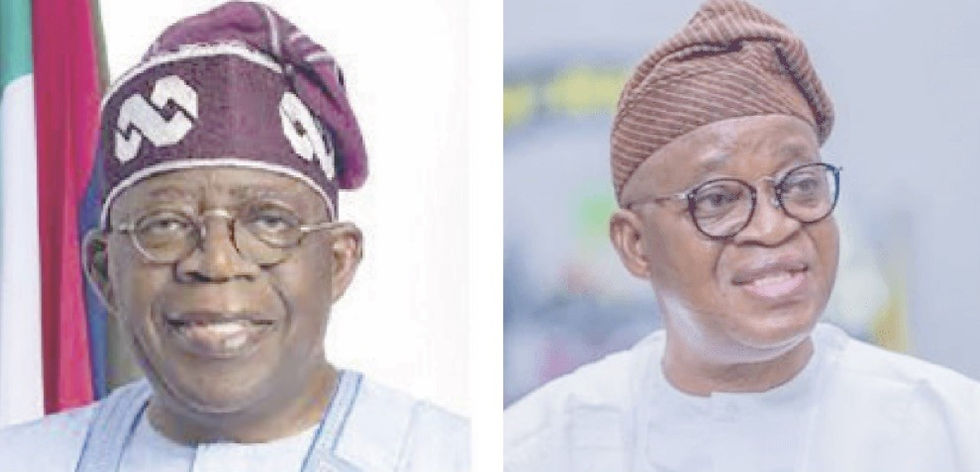
Nigeria may be losing as much as N400 billion annually in its maritime sector due to weak policy execution, regulatory loopholes and structural inefficiencies, industry stakeholders have warned. They are now urging the Federal Government to implement targeted policy reforms capable of repositioning the sector as a true engine of economic growth. According to findings by Daily Sun, persistent infrastructure deficits, inefficient cargo-handling processes and weak enforcement of maritime laws continue to erode revenue that should ordinarily accrue to the economy. Analysts estimate that between N300 billion and N400 billion could be saved yearly if the right reforms are introduced and effectively enforced. Beyond direct revenue losses, stakeholders say broader trade inefficiencies, driven by unregulated shipping and terminal charges, regulatory ambiguity and periodic industrial disruptions, may be costing Nigeria between N500 billion and N700 billion annually.
For further information please check the link below:


Comments