

WAF Shipping Focus: Week 1

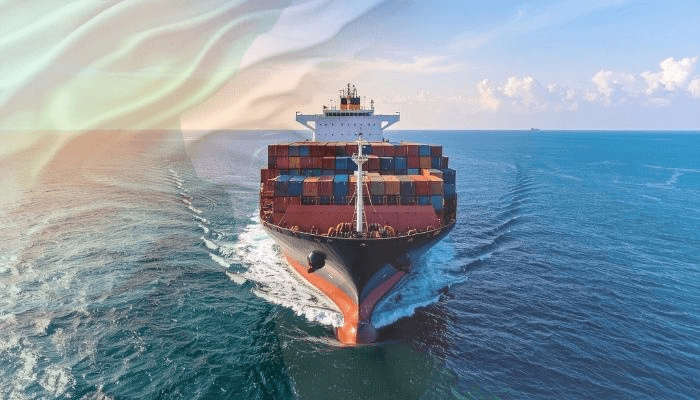
Stakeholders in Nigeria’s maritime industry have renewed calls for urgent and massive investment in port infrastructure, warning that the country is haemorrhaging about N20 billion every day as cargo is diverted to neighbouring ports with better facilities. Industry operators say Nigeria should naturally dominate container traffic in West and Central Africa, as nearly 80 per cent of cargo bound for the region is ultimately destined for the Nigerian market. Yet, less than 20 per cent of these containers actually berth at Nigerian ports, a situation blamed squarely on ageing infrastructure and persistent inefficiencies at key gateways such as Lagos and Port Harcourt. According to the stakeholders, congested port corridors, deteriorated access roads, shallow channels, obsolete cargo-handling equipment and slow documentation processes have combined to make Nigerian ports uncompetitive. Shipping lines, faced with delays and rising
costs, increasingly prefer nearby ports where turnaround times are faster and operations more predictable, even when the final destination of the cargo is Nigeria.
For further information please check the link below:
https://thesun.ng/stakeholders-push-for-higher-port-investment-to-curb-cargo-diversion-revenue-loss/

Security agencies have disrupted a major drug trafficking operation following the interception of 30 slabs of cocaine, weighing 30.1 kilograms, aboard the Marshall Islands-flagged vessel, MV Aruna, at the Lagos port. The seizure was carried out through a joint operation by the Nigeria Customs Service (NCS) Apapa Area Command and the National Drug Law Enforcement Agency (NDLEA). The seizure occurred on the first working day of the new year at the Greenview Terminal within Apapa Port, Lagos. The illicit substance was carefully hidden aboard the ship, further showing the sophisticated tactics employed by smugglers attempting to exploit the nation’s busiest seaport. In a statement by Isah Sulaiman, a Chief Superintendent of Customs and Public Relations Officer of Apapa Port Command, Comptroller Emmanuel Oshoba, Customs Area Controller of the Command, commended the officers from both agencies for their vigilance
and professionalism.
For further information please check the link below:

To boost coastal shipping in West Africa, Ghana has confirmed plans to establish a ferry service along the Lagos-Abidjan corridor. Last month, Ghana’s Transport Minister Joseph Nkipe confirmed to the local media that the planning for the ferry service is in advanced stages. A marine consultancy company has already been appointed to fast-track the development of the service. The ferry service is reportedly nicknamed the "Afropax", and would provide first-of-its kind maritime connectivity in West Africa. The service involves linking Tema port in Ghana to other West African countries such as Benin, Togo and Nigeria. These countries are
currently connected by the transnational Lagos-Abidjan highway corridor. The highway is increasingly becoming a trade barrier for the region because of occasional congestion and delays, and a ferry service would act as an alternative to the road network. The sea route option could help cut carbon emissions compared to over-the-road haulage.
For further information please check the link below:

The Federal Government has reaffirmed its determination to end the longstanding
dominance of foreign operators in Nigeria’s shipping industry by strengthening indigenous shipowners through targeted policies, regulatory support and improved access to maritime financing. The assurance came as the ministry highlighted far-reaching reforms and policy actions undertaken since Oyetola assumed office in August 2023, with 2025 described as a defining year for the sector. Speaking on behalf of the minister, his Special Adviser on Media and Communications, Dr Bolaji Akinola, in a press statement, said the current administration is determined to dismantle structural barriers that have historically disadvantaged Nigerian shipowners while providing the financial, regulatory and
institutional support required for sustainable growth. According to Akinola, the long-awaited activation of the Cabotage Vessel Financing Fund (CVFF) in 2025 represents a major turning point for indigenous operators who have struggled for over two decades to access affordable long-term financing.
For further information please check the link below:

As part of efforts to ensure full compliance with existing maritime laws and regulations, the Nigerian Maritime Administration and Safety Agency (NIMASA) has commenced special operational enforcement code named “Operation Zero Tolerance for Non-Compliance” in the Nigerian maritime domain. Osagie Edward, Deputy Director/Head, Public Relations, NIMASA disclosed in a statement. The directive was issued through a Marine Notice, pursuant to the Agency’s statutory mandate under the NIMASA Act 2007, the Coastal and Inland Shipping (Cabotage) Act 2003, the Merchant Shipping Act 2007, and other applicable regulations. Under this operation, all Ship/Vessel Owners, Operators, Managers, International and National Oil Companies, Masters and Officers of Merchant Ships, Shipping
Companies, Shipping Agents, Charterers, Offshore Installations and Platforms Operators, Vessel Operators at the Free Trade Zones (FTZ), and Maritime Stakeholders operating or intending to operate within Nigerian waters are required to ensure full compliance with statutory requirements.
For further information please check the link below:

The Nigeria Customs Service (NCS) has commenced the implementation of a framework that grants safe passage to personal vehicles temporarily imported or transiting through Nigeria by international travellers. The initiative, announced in a press release, is anchored on the Nigeria Customs Service Act, 2023, and supported by relevant international conventions governing temporary admission and transit of vehicles. According to the NCS, the regime applies to all personal, non-commercial vehicles belonging to international travellers entering Nigeria for tourism, diplomatic, business, or personal reasons. The service said the move is
aimed at easing cross-border mobility, strengthening Nigeria’s compliance with international obligations, and reinforcing the country’s commitment to trade facilitation and regional integration. Customs explained that the implementation derives its legal authority from Sections 142, 143, 144, and 245 of the NCS Act, 2023. It is also aligned with international instruments such as the Revised Kyoto Convention, the UN TIR Convention of 1975, the Istanbul Convention of 1990, and the ECOWAS Protocol on Free Movement of Persons, Residence, and Establishment.
For further information please check the link below:


Comments